
- Key Takeaways
- How Heavy-Duty Suspension Works
- Identify Suspension Failure
- The Ripple Effect of Neglect
- Modern Suspension Technology
- The Repair vs. Replace Dilemma
- Your Proactive Maintenance Plan
- Create a checklist to outline steps for establishing a routine suspension inspection and maintenance schedule.
- Advise training drivers to recognize and report early warning signs of suspension problems.
- Recommend partnering with experienced technicians for comprehensive suspension assessments.
- Encourage booking a full suspension inspection with Coppertop Truck Repair to ensure peak performance and avoid costly breakdowns.
- Conclusion
- Frequently Asked Questions
- What does a heavy-duty suspension system do?
- How can I spot early signs of suspension failure?
- What happens if I delay suspension repair?
- When should I repair versus replace components?
- How does modern suspension technology help fleets?
- What maintenance plan keeps heavy-duty suspensions reliable?
- Can misalignment damage heavy-duty suspension parts?
Key Takeaways
- Learn how springs, shocks, and bushings support loads, absorb impact, and stabilize steering. Maintain alignment because suspension geometry heavily influences handling and braking while under load.
- Keep an eye on load distribution and ride height to avoid chassis sagging and uneven component stress. Preventative care is important. Do not overload or unevenly load to prevent premature wear and failures.
- Check shocks and dampers regularly for leaks, weak rebound, or damage to retain control and ride comfort. Swap out worn parts to safeguard tires, bearings, and your driveline.
- Monitor warning signs such as uneven tire wear, reduced handling, strange noises, and visible damage during routine inspections. Take advantage of driver checklists and define mileage-based intervals for comprehensive suspension inspections.
- Stop the ripple effect of such neglect that drives up fuel consumption, wears tires and drivelines faster, and risks compliance violations. Save on your total cost of operation by investing in quality parts and professional alignment.
- Utilize 21st-century tech, including smart sensors, next-gen materials, and active systems for improved uptime and safety. Determine whether to repair or replace your heavy-duty suspension based on damage, vehicle age, and duty cycle. Arrange a full inspection with Coppertop Truck Repair to keep ahead of failures.
Heavy-duty suspension repair involves diagnosing and repairing wear, damage, or failure in truck, bus, and commercial vehicle suspension systems. We cover leaf springs, air bags, shocks, control arms, bushings, U-bolts, hangers, and axles. To avoid expensive downtime, repair schedules typically begin with ride height inspections, bushing play inspections, and air leak searches at 690 kPa. These shops use torque specs and laser alignment to under 1 mm toe and load tests to verify safe handling. Typical culprits are heavy payloads, rough roads, corrosion, and insufficient lubrication. Prices differ by component and man-hours, ranging from one-day fixes to several days of axle work. Below we detail symptoms, diagnostics, parts, costs, and service tips.
How Heavy-Duty Suspension Works
Heavy-duty suspensions distribute weight, dampen movement, and maintain tire traction. Key parts work together. Springs carry mass, shocks slow motion, and bushings allow movement without harsh metal contact.
| Component | Primary role | What it prevents | Service cue |
|---|---|---|---|
| Springs (leaf, coil, air) | Support static and dynamic load | Chassis sag, bottoming | Cracks, uneven sags, air leaks |
| Shock absorbers/dampers | Control rebound/compression | Bounce, wheel hop | Oil leaks, weak rebound |
| Bushings | Isolate and pivot joints | Vibration, play | Tears, excessive movement |
Proper geometry, including camber, caster, toe, and axle alignment, maintains steering accuracy under load. A beam connecting two axles on certain heavy-duty configurations aids in splitting weight between axles and enhances both stability and ride. Check the entire system every 40,000 km or each service. Little defects become significant quickly and pricier.
1. Bearing the Load
Leaf springs distribute load across the frame and combat axle wrap under heavy torque. They are typical on multi-axle trucks and elegantly complement an inter-axle beam to share loads. Progressive coil springs manage light, static weight initially, then harden as the cargo increases, assisting roll control. They will bottom out if the load becomes excessive. Air suspensions employ air bags and valves to level the chassis. A six-month field study on 50 retrofitted trucks demonstrated superior ride and stability.
Overloaded or unbalanced loads accelerate wear, crack leaves, blow airbags and bend hangers. A truck might lean, squat, or have uneven sags when a spring breaks or an airbag leaks.
Distribute load across axles and left and right. Aim for balanced axle scales and even cargo distribution.
Suspension ride height, shackle angle, and air pressure setpoints. Search for rust traces at leaf ends, cracked clips, or peak control valve drift.
2. Absorbing the Shock
Shocks convert motion into heat and reduce bounce over potholes, ruts, and speed bumps. They prevent wheels from bouncing on washboard or cobble and save springs.
Worn shocks increase bounce, degrade comfort, and decrease control. Braking can degrade, with emergency stopping distances increasing by as much as 30%.
Swap in pairs when oil stains, dinged bodies or sluggish rebound arrive. How Heavy-Duty Suspension Works.
3. Maintaining Control
A good suspension maintains geometry so your steering input matches tire angle, which is most important when the gross mass is high. Drift, sway, or slow return to center in steering are due to faulty parts.
Alignment ties it all together. Wrong caster tires the driver. Wrong toe scrubs tires and fuel.
Check control arms, bushings, and stabilizer bars for play. Replace torn bushings and torque fasteners after bushing set-in.
4. Maximizing Traction
Suspension keeps tires in steady contact so ABS and braking work. Uneven suspension increases braking distance and wheel spin on wet or gravel.
Premium components keep hold while shifting weight, changing lanes and merging onto ramps. Air systems can auto-level, while coils and leaves require manual load planning.
Get alignments and check your tires often. Bad suspension bangs up your tires and gas. A healthy setup can boost fuel usage by as much as 12% and add as much as 30% to tire life. Skipping maintenance can cost you repairs over $1,000.
Identify Suspension Failure
Heavy-duty suspension failure manifests in obvious ways that impact safety, tire life, and handling. Early detection reduces downtime and cost.
- Uneven tire wear, patchy tread, or cupping
- Excessive bounce after bumps or potholes
- Sagging body on one side or rear squatting
- Pulling to one side, especially during turns
- Knocking, clunking, squeaking, or metallic ping sounds
- Fluid leaks near shocks or struts
- Delayed steering response or poor straight-line stability
Create a driver checklist for daily or weekly walk-arounds: note tire wear by wheel position, check ride height side to side, listen for noises on low-speed turns over rough ground, and look for oil film on shocks. Plan full suspension checks every 20,000 to 30,000 kilometers, or sooner following heavy loads, rough terrain, or impacts. Early detection saves you from expensive breakdowns and dangerous driving.
Uneven Wear
Uneven tread, cupping, feathering or rapid shoulder wear indicate alignment and insufficient damping. Worn bushings, ball joints, shocks or springs alter camber and toe so the tire loses even contact and heats up.
Monitor wear on all wheels using tread-depth readings at the inner, center, and outer ribs. Cross-check each service left to right and front to rear. If rhythms differ, check connections and brackets. Taking care of your suspension first saves tire life and reduces replacement spend.
Poor Handling
Too much body roll, sway on lane changes, nose dive under braking, or a slow return to center all indicate faults. Any additional bounce after a bump indicates your shocks are fading. If the truck leans or pulls to one side in a turn, suspect uneven springs or alignment.
Detect Suspension Failure. Stop and ask for inspection if the vehicle feels loose or difficult to hold in the wind or on ramps. Getting your alignment straight and replacing worn parts returns that predictable control, which becomes important when you’re under full load.
Visible Damage
Check for cracked or rusted leafs, broken coils, bent control arms, torn bushings, loose U-bolts, and oil streaks on shocks or struts. Fluid leakage signifies that the unit is on its last legs.
Obvious defects tend to mask underlying wear. Photo and record observations by axle and side. Don’t let a damaged part become a cascading failure.
Strange Noises
- Clunk over bumps: loose bolts, worn ball joints, failed bushings.
- Squeak at low speed: dry bushings or spring rub
- Rattle on rough roads: loose mounts or links
- Metallic ping: cracked leaf or coil shifting
Noise maps to motion. Isolate by checking mounts, joints, and shock eyes. Repair promptly to prevent repair chains and misalignment.
The Ripple Effect of Neglect
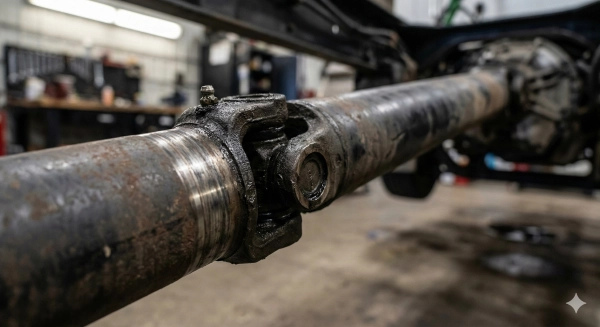
Heavy-duty suspension issues distribute expenses and hazards across the entire vehicle and fleet. Little issues snowball into driveline strain, blowouts, fuel waste and safety hazards with fines and downtime.
Driveline Stress
Weak springs, cracked bushings or leaking shocks let axles pitch and hop. That movement pumps brutal forces into U-joints, slip yokes and differentials. On rough roads or with heavy loads, the increased angle and shock can chip gear teeth and stretch splines.
If your suspension sags or becomes misaligned, your driveshaft no longer spins true. Vibration escalates, bearings begin to heat, and seals begin to leak. In humid or salty areas, corrosion can start to occur within one to two years, accelerating wear even more.
Schedule suspension inspections at every service. Verify ride height, bushing play, shock rebound, and air spring leaks. Catching minor faults early prevents major driveline repairs that can cost thousands in parts and downtime.
Watch for clues: shudder on takeoff, a steady buzz at 60 to 80 km/h, clunks on load shifts, or fresh metal dust near yokes. Here’s the ripple effect of neglect: treat new noises as early warnings.
Cargo Damage
A severe, bouncy trip causes pallets to shift, straps to loosen and cases to chafe through. Delicate cargo—electronics, glass, perishables—bears the brunt initially. That can lead to mangled merchandise, claims, or lost customers.
Conduct load tests and ride-quality checks after repairs or route changes. Log shock temperatures and axle acceleration if you can. They say, “If freight breaks loose in transit, examine and repair the suspension immediately to prevent further damage.
Stable suspension reduces chances of tire blowouts that spew shrapnel and put other road users at risk.
Fuel Waste
Poo alignment and uneven ride height increase rolling resistance. The engine strains more to push the identical mass, so gasoline consumption spikes.
Monitor l/100 km by route and vehicle. A consistent increase without load variation typically indicates worn suspension components. A few repairs applied at the right time can improve miles per gallon and reduce yearly fuel expenses.
Tire Costs
Worn bushings and shocks let your wheels toe and camber off spec. Tread then cups or feathers quickly, pushing premature burnouts. Fleets can experience tire spend increases of up to 25% with extra blowout risk.
Link neglect inspections to every tire rotation and air pressure check. Measure tread wear across the width. Keep alignment updated. A good suspension safeguards your tire investment and uptime.
Modern Suspension Technology
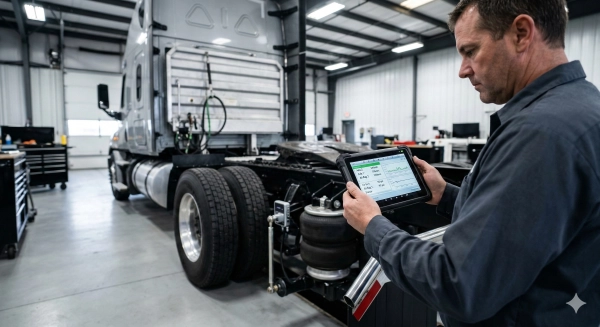
-duty suspensions of today now mix rugged hardware with intelligent electronics. Systems employ sensors, controllers and adaptive valves to control extreme loads, optimize ride quality and safeguard cargo across leaf-spring and air-ride platforms. Tough parts count, but so do diagnostics that flag problems early to avoid expensive downtime and DOT buzz-bombs.
Smart Sensors
Smart sensors monitor ride height, axle load, airbag pressure, damper stroke, and temperature in real time. On leaf-spring setups, height and load sensors detect sag or cracked leaves. On air-ride, pressure and height indicate leaks, leveling valve faults, or worn bushings.
Auto alerts catch drift quickly. Low air pressure, uneven ride height, or high damper temperatures indicate leaks, valve failure, or shock fade. Early warnings help schedule servicing before wear affects tires, hubs, or frames.
Cue sensor readings into fleet software to establish limits by lane, area, or cargo. Link alerts with work orders, parts stock, and shop calendars to go from reactive fixes to scheduled repairs.
Sensors and suspensions lift uptime, reduce fines associated with out-of-spec ride height or axle loads, and facilitate audit trails. They provide lift-axle engagement data, verifying compliance and maximizing fuel savings when axles are lifted on light loads.
Advanced Materials
Modern components employ high-strength steels, shot-peened leaves, forged arms, and composite bushings to absorb daily extreme loads. Airbags have reinforced cords and ozone-resistant rubber to prevent cracking.
These alloys and composites shave weight and combat fatigue, which reduces maintenance and dampens wear on shocks, pins, and tires. Lighter unsprung mass assists braking and fuel consumption.
On repair, think upgraded leaves, high-spec bushings, corrosion-proof fasteners and premium airbags. Engineered components are sized to your maximum gross mass and duty cycle.
Good parts are more expensive initially, but they pay back in extended service intervals, less downtime, and less unplanned spending.
Active Systems
Active systems change damping and stiffness as road and load change. Controllers read wheel speed, body motion, and height, then tune valves to keep the chassis steady over rough ground or smooth highways.
The gains are clear: a steadier ride, better stability, less cargo shock, and fewer cracked mounts. Drivers come away fresher, and components experience less punishing peak loads.
Fleets with mixed terrain or variable payloads should pilot active packages on critical routes. They tend to produce quicker turns along with less tire and shock wear.
Active control trims manual tweaks, keeps settings in spec and spreads loads evenly. This extends spring, airbag and joint life.
The Repair vs. Replace Dilemma
Deciding whether to repair or replace is a matter of cost, safety, and uptime. Start by noting symptoms: pulling to one side, harsh bounce, uneven ride height, odd knocks over bumps, steering shake, uneven tire wear, and weaker braking. If one or two parts give out, such as shocks or struts, targeted repair can work. More than one rebound after a 10 mph bump test indicates worn shocks. For fleets or older cars, general wear tends to make a complete refresh the more secure decision.
| Option | Costs (USD) | Benefits | Risks | Best Use Case |
|---|---|---|---|---|
| Repair specific parts | 200–800 | Lower upfront cost, less downtime | Mismatch with old parts, repeat visits | Isolated faults (e.g., one shock/strut, single bushing) |
| Replace matched sets | 600–1,800 | Restores geometry, even wear, better stability | Higher initial spend | Axle pairs, shocks/struts, spring sets |
| System upgrade | 1,200–4,000+ | Stronger load control, safety, long life | Highest cost, may need calibration | High mileage, heavier duty cycles, aging fleets |
Determine the level of damage initially. Check out bushings, ball joints, control arms, springs, shocks/struts, sway bars, and mounts. Look for leaks, torn boots, cracked rubber, sagging springs, bent arms, and loose hardware. Check ride height at all corners and examine tire wear. If the blame lies with a single component and the others pass spec, fix that one. If wear shows across an axle or multiple corners, replace in matched sets to keep alignment true and reduce comebacks.
Consider vehicle age and utilization. Heavy loads, long routes, rough roads, and high heat or cold increase stress on seals and joints. Similarly, a car that’s seen years on the road might benefit more from a complete refresh or a higher quality part upgrade than it would from patchwork repairs. Well-timed work cuts the danger of connected failures, like a dodgy shock leading to spring-on-spring fatigue and brake fade on hard stops.
Good parts and pro install count on both routes. Use parts that are equal or better than OEM rated, corrosion protected and bushings proven. Match the work with fresh hardware, torque to spec, then alignment and brake check. End with a road test across mixed terrain. Procrastination transforms little clunks into bent arms, wonky tires and lost braking traction that ultimately cost more than immediate attention.
Your Proactive Maintenance Plan
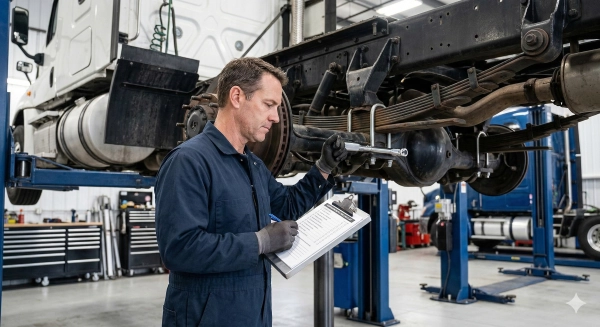
Your proactive maintenance plan Heavy-duty suspensions, stable, safe and cost-efficient. It’s about preventing issues before they begin, not repairing them post-breakdown. It combines regular inspections of oil, brakes, tires, fluids, suspension, and steering with defined responsibilities, fixed frequencies, and work verification.
Create a checklist to outline steps for establishing a routine suspension inspection and maintenance schedule.
Develop an easy-to-follow checklist linked to odometer readings and hours. For 10,000 to 15,000 miles, change engine oil and filters per manufacturer guidance, check brake pad or lining life, inspect rotors or drums, confirm fluid levels, and rotate or replace tires. At least every 20,000 to 30,000 miles, have your shocks checked for leaks, your bushings for cracks, your springs for sag or fractures, and your U-bolts for torque. Inspect tie rods, drag link, ball joints, and steering box play. Take ride height side to side as a measure. Check for cupped or feathered tread wear. Grease all zerks. Every quarter, align axles, check wheel bearing end play, air springs, and leveling valves, and perform a fault code scan for electronic stability or air systems. Record observations, including date, miles, and parts replaced. Decide who signs off. Keep records to identify patterns such as quick tire wear or decrease in fuel efficiency.
Advise training drivers to recognize and report early warning signs of suspension problems.
Provide drivers with brief training and a one-page cab card. Warning cues include when the truck leans to one side, experiences a nose dive on brake, has a harsh bounce after a bump, shows loose steering or wander, knocks over rough roads, has uneven tire wear, the air compressor cycles too often, or there is a drop in fuel range. Have a clear report path that includes the time, route, speed, road type, load mass in kilograms, and photos of tires or leaks. Quick reports stop minor issues from becoming road calls, brake hazards, or engine stress.
Recommend partnering with experienced technicians for comprehensive suspension assessments.
Employ licensed heavy-duty specialists for biannual deep inspections. They can do shock dyno, bushing deflection, pin-to-pin spring length, frame and crossmember crack checks, steering gear lash set and axle alignment with laser gauges. They quantify costs: worn shocks and misalignment raise fuel use and tire spend, while timely fixes cut both. This prevents reactive repairs, emergency downtime and safety hazards.
Encourage booking a full suspension inspection with Coppertop Truck Repair to ensure peak performance and avoid costly breakdowns.
Book a comprehensive inspection with Coppertop Truck Repair to benchmark ride height, alignment, and component wear. Then schedule service intervals that suit your routes and loads. Their reports identify what to address immediately and what to monitor, assisting in decreasing fuel consumption, avoiding uneven tire wear, and maintaining optimal brake and steering responsiveness.
Conclusion
Heavy-duty suspension repair begins with transparent inspections, basic instrumentation, and pure information. Check for sag, tilt, leaks, and heat. Monitor track tire wear by axle. Record log shock temperatures following a haul. Short, steady inspections beat one big overhaul.
New technology assists as well. Employ load sensors to mark strain. Scan fault codes prior to a tear down. Match parts to duty cycle. City stop-go needs stout bushings. Long haul needs heat-tough shocks.
Small fixes, on time, cost less than a complete swap. Bush a joint now, miss a cracked mount later. Grease on time. Torque to spec. Carry spares for links, bags, and shocks.
Have a rig that rides rough or blows drifts? Email me your notes, weights, and tire shots. Let’s map a fix you can employ next run.
Frequently Asked Questions
What does a heavy-duty suspension system do?
It carries heavy loads, maintains tire contact with the road, and stabilizes steering and braking. It dampens bumps in the road. This shields loads, minimizes driver tiredness, and lengthens vehicle longevity.
How can I spot early signs of suspension failure?
Look out for sagging ride height, uneven tire wear, harsh bouncing, wandering steering, clunking noises, or fluid leaking around shocks. Increased stopping distance and bad cornering are warning signs. Check after each long haul or heavy load.
What happens if I delay suspension repair?
Petty problems multiply. Worn bushings strain springs, shocks, axles, and tires. Braking distance increases, steering wanders, and components break down earlier. Downtime and repair expenses skyrocket. Timely fixes guard safety, uptime, and TCO.
When should I repair versus replace components?
Repair if wear is isolated and within service limits. Heavy duty suspension repair means to replace parts if they are cracked, bent, leaking, heat-damaged, or past mileage hours. Always replace in pairs on an axle. Use OEM specs and measurement data, not guesswork.
How does modern suspension technology help fleets?
Air springs, electronic damping, and load-sensing valves adjust to weight and road variations. They reduce vibration, enhance braking, and safeguard cargo. Telematics, meanwhile, flags faults before they become serious. The result is better fuel use, uptime, and driver comfort.
What maintenance plan keeps heavy-duty suspensions reliable?
Configure inspections by mileage, hours, and load intensity. Check ride height, bushing play, shock temperature, and alignment. Torque fasteners. Grease OEM intervals. Rotate and balance tires. Record data and respond to trends prior to failures.
Can misalignment damage heavy-duty suspension parts?
Yes. It causes increased tire scrub, heat and bushing stress. It fast-tracks spring, shock and steering link wear. Check alignment after hard hits, parts swaps or weird tire wear. Correctly aligned wheels reduce your costs and increase your safety.
Looking for something else? Browse Coppertop Truck Repair’s full range of commercial truck repair and inspection resources.
Heavy Duty Truck Repair Services
Heavy Duty Trailer Service and Repair
Looking to learn more about heavy-duty suspension systems? You may check on the resources below for additional insights.
Safety Inspections for Commercial Trucks and Trailers in Alberta