
- Key Takeaways
- Why Prioritize Engine Maintenance?
- Essential Engine Fluids
- The Ripple Effect of Neglect
- Tailoring Your Maintenance Strategy
- Spotting Early Warning Signs
- The Future of Engine Care
- Conclusion
- Frequently Asked Questions
- What makes heavy-duty engine maintenance essential?
- Which engine fluids should I check most often?
- How does neglecting maintenance affect performance?
- How do I tailor a maintenance plan to my operation?
- What are early warning signs of engine trouble?
- How often should I change oil in heavy-duty engines?
- What trends shape the future of engine care?
Key Takeaways
- Focus on preventive maintenance to keep downtime and accidents to a minimum. Prepare for regular service and oil changes at manufacturer intervals and operating hours.
- Take care of heavy-duty engine maintenance. Keep an eye on the levels and quality of engine oil, coolant, transmission fluid, and diesel exhaust fluid. Change them when appropriate.
- Take care of little stuff before it turns into expensive breakdowns and downtime. Explore any abnormal sounds, loss of power, leaks, or exhaust smoke as they arise.
- Tailor your maintenance plan to your environment, engine age, and load demands. Modify service intervals for severe conditions like very high or low temperatures, heavy loads, or constant stop and go work.
- Stay compliant to avoid fines and safeguard your brand. Maintain proper service documentation and adhere to emission and safety regulations for your area and sector.
- Get ready for what’s next with predictive analytics, IoT sensors, and next-generation lubricants. Utilize data to proactively schedule maintenance and extend engine life.
Heavy-duty engine maintenance is the ritual of checks, services, and repairs that keep large diesel and industrial engines operating at maximum load and within safe limits. Everything from oil and filter cycles to coolant tests, valve lash checks, and fuel system care, as well as aftertreatment upkeep for SCR and DPF units is included. Schedules are connected to engine hours, load cycles, and even climate — not just calendar dates. Its fundamental goals are less wear, consistent power, clean emissions, and fewer unplanned shutdowns. Key metrics include oil viscosity, TBN, soot percentage, coolant pH, NOx sensor health, and exhaust backpressure. To plan well, fleets monitor service intervals by 250 to 1,000 hours, record faults, and employ fluid analysis for trends. The tables below provide an overview of actions, resources, and expenses.
Why Prioritize Engine Maintenance?
Heavy-duty engines encounter long hours, weight, heat, dirt, and vibration. Preventive maintenance reduces breakdowns, maintains equipment running, and safeguards both individuals and budgets across fleets and individual units.
1. Maximize Uptime
Uptime increases when regular work nabs minor problems early. Oil analysis identifies fuel dilution, soot, or coolant leaks before bearings score. Coolant checks spot low inhibitors that accelerate cavitation in wet liners. Valve lash set to spec aids cold starts and reduces misfire risk.
Emphasize engine maintenance because that’s what counts. An 18 hour per day, 60% load generator requires shorter oil and filter change cycles than a short burst use crane. Monitor hours, idle time, and load via telematics. Don’t stagger stops. Replace belts, hoses, and filters as a kit.
Schedule downtime. Batch services by site, stock fast-moving parts such as filters, O-rings, and clamps, and schedule work during off-peak shifts. A 2-hour planned stop is less expensive than a 2-day unplanned stop waiting on a turbo or injector rail.
2. Reduce Costs
The least expensive repair is the one you don’t have. Clean air filters keep fuel burn down by maintaining proper air-fuel mixture. A clogged filter can increase consumption by three to five percent, which adds up quickly in a twelve-liter engine at high load.
Fuel the right oil grade and quality. Low-ash oils safeguard after-treatment and reduce DPF regens, conserving fuel and effort. Stretch intervals only with oil analysis trends and not guesswork.
Why prioritize engine maintenance first? Original or premium OEM-equivalent parts really do last longer than no-name duplicates. An early seal failure can be a bearing and crank taker, not a leaker.
3. Ensure Safety
Cooling checks prevent heat stress that can seize on grades. Exhaust leaks close to the cab increase CO risk, so inspect all joints and clamps. Dirty injectors cause throttle lag and poor response at tight sites.
Keep shutdown systems live as well. Test high-temperature and low-pressure cutouts, horn alerts, and dash lamps. Check that fire suppression nozzles are unobstructed close to the turbo and DPF areas, where surface temperatures can exceed 500°C.
4. Preserve Value
Reasonably maintained engines go quicker and for a better price. Record oil reports, parts receipts, fault codes and repairs. Buyers pay extra when they notice consistent compression numbers and stable blow-by. Clean bays, intact looms and no fluid stains demonstrate care you can’t fake.
5. Meet Compliance
Emissions and noise regulations are stricter than ever. Clean EGR paths, healthy DOC/DPF/SCR units, and proper DEF quality greater than 31.8% urea keep you in limits and out of fines. Adhere to maker-set service procedures so onboard monitors clear visits. Keep logs with date, hours, work, and parts to demonstrate due diligence worldwide.
Essential Engine Fluids
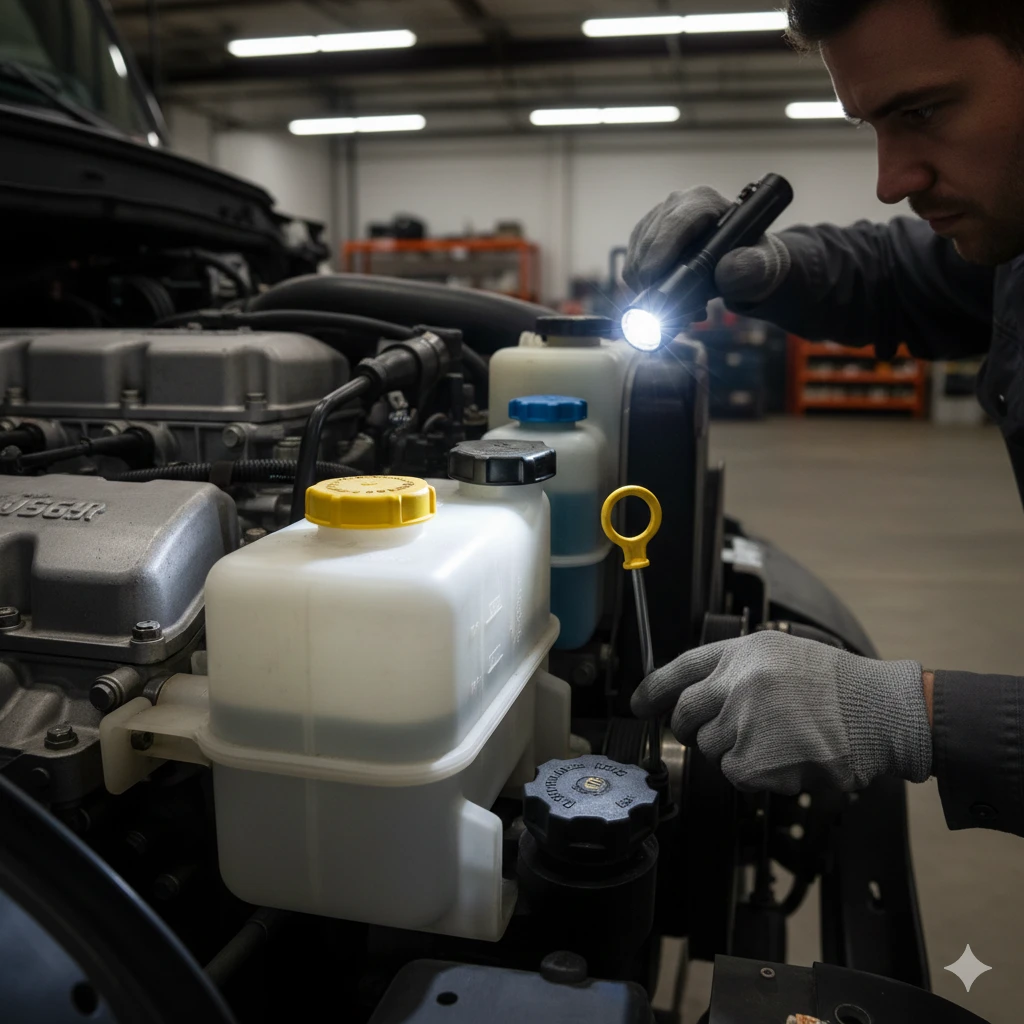
Engine Oil
Use the grade and spec the manufacturer lists. For diesel fleets, popular specs are API CK-4 or FA-4, ACEA E7 or E9. Match viscosity to climate and duty: 5W-40 is suitable for cold starts, 15W-40 is suitable for hot regions, or low-vis FA-4 is suitable for fuel savings in newer engines. High-soot service requires potent detergents and dispersants, while off-highway work in dust demands a greater ability to reduce ash.
Track oil by hours or fuel, not miles. Pull samples every 250 to 500 hours and use oil analysis. Beware of iron and chromium if it is wear, silicon if it is dirt, and fuel dilution over 2 percent. If TBN falls rapidly, stretch filter changes or shorten intervals. Fix root causes: upgrade air filtration if silicon is high, and check injectors if diesel shows in oil.
Coolant
Choose the proper chemistry. Regular coolant with SCAs requires constant topping off. OAT and Hybrid OAT provide long life and enhanced liner cavitation control. There is no point in mixing types without trying.
Check freeze and boil points with a refractometer. Target close to a 50/50 coolant to deionized water mix for most climates, up to a 60/40 mix in hot duty. Trace nitrite or molybdate as your engine requires. Hard water leaves scale that spikes head temperatures, so flush with deionized water at service.
Transmission Fluid
Transmission maker’s spec, not engine oil rules. Autos might require TES-295 and up, while manuals might require a particular GL rating or synthetic ATF. Heat is the key danger. If you tow, run hills or stop-start, add a cooler and change fluid earlier.
Inspect color and odor. A burnt smell, dark fluid, or foam indicates heat or air. Sample for wear metals such as copper and clutch material. Leaks at output seals are common under high load.
Diesel Exhaust Fluid
DEF contains 32.5% urea and 67.5% deionized water. Keep it closed and keep it clean. Dust or tap water will destroy SCR components. Keep close to 20 to 25 degrees Celsius to reduce shelf loss. Stainless or HDPE only.
Monitor quality with a refractometer. Purge lines to prepare for extended idle seasons. Remove injector crystal build-up and clean the tip with deionized water only.
The Ripple Effect of Neglect
Neglecting basic heavy-duty engine care triggers connected breakdowns that impact operations, budgets, and brand trust across borders and fleets big and small.
Operational Failures
Missed oil changes thicken lubricant, which heats friction. Bearings score, turbo seals weep, and fuel pumps drag. A truck that used to hold at 1,500 rpm begins to hunt at idle. Cold starts linger, and black smoke spikes under load.
Cooling neglect turns small problems into large ones. Scale accumulates in the radiator, the coolant loses inhibitors and cavitation pits liners. A backhoe goes hot on a 35 °C day and derates mid-shift. A single overheated cycle can warp a head and stretch downtime from hours to weeks.
Air and fuel filters get clogged and tip the air-fuel mix. Injectors coke, DPFs load quick, and aftertreatment faults pile up. A 200 kW genset then trips an emissions self-test, shutting down during peak demand. Sensors attempt to compensate, but closed-loop control can’t hide fundamental flow decay.
Belts, hoses, and mounts have something to say too. A $10 belt that frays can take out an alternator, kill battery charge, and stall a mixer at a pour site. Vibration from worn mounts fractures exhaust joints and results in fume infiltration and safety alerts.
Financial Burdens
Downtime adds up and multiplies dollars quickly. One day off-road can destroy a week’s worth of margin when a cross-border load sits, crew time gets wasted, and fines pile on.
Reactive fixes are more expensive than planned work. An in-frame overhaul following oil starvation might run 40 to 60 percent of the engine value, whereas regular oil and filter service costs a mere fraction of that. Fuel burn increases by 3 to 8 percent with degraded air and injector health, which adds up over hundreds of hours every month.
Warranty claims are denied when logs are sparse. Missed intervals, wrong specification fluid, or non-OEM filters will often void coverage, leaving full parts and labor costs on the owner.
Reputational Damage
Clients monitor on-time rates, site uptime, and safety records. Frequent breakdowns send offers to the bottom heap, even if per-unit prices appear keen.
Drivers and techs abandon fleets that overlook maintenance. Turnover increases training costs and delays action when a warning light flashes. Local regulators notice as well. Flunked roadside checks or opacity tests are public data that partners check prior to allocating work.
Tailoring Your Maintenance Strategy
Good maintenance plans map to actual usage, not sweeping guidelines. Tailor work and breaks to the effort your motor expends, the time on the clock, and the cargo it hauls.
Operating Conditions
Dust, heat, cold and moisture mold wear rates and service requirements. In dusty mines or quarries, cut air filter inspections from 500 hours to 250 hours and monitor filter restriction with a gauge, not by hand. For wet or coastal sites, include corrosion checks on connectors and grounds and apply dielectric grease at each quarterly service.
High heat thins oil faster. At ambient temperatures above 35°C, jump to a higher-viscosity oil within the maker’s spec and sample every 250 hours. Freezing temperatures under −10° require block heaters, glow plug verifications, and winter diesel to reduce wax build-up. For long-idle engines, such as on cranes or municipal trucks, idle hours must be counted as partial load hours, so schedule oil changes based on fuel burned or total runtime, not just odometer miles. Above 1,500 m, verify turbo boost targets and smoke limits. Air density impacts fueling and exhaust gas temperature, so check charge-air coolers for leaks at every service.
Engine Age
Early on, needs baseline checks. During the initial 250 to 500 hours, check the torque on head bolts if permitted, retighten exhaust clamps and record fluid burn rates for a baseline. Any metal in that first oil sample is worthy of a prompt follow-up test.
Mid-life turns to trend management. Standardize oil analysis, nitrite or OAT tests for the coolant, and valve lash every 1,000 to 2,000 hours. Monitor injector balance and turbo shaft play at annual services.
Late life is about prevention. Reduce oil and filter cycles by 20 to 30 percent. Pressure test the cooling system during every service. Schedule top-end work, including injectors, valve seats, and timing actuators, prior to power loss manifesting under load.
Load Demands
Constant high load produces additional heat per hour. Synthetic oil with higher HTHS within spec, check fan and shroud sealing, wash charge-air coolers by measured airflow decrease, not just appearance.
Business or stop-start work requires more flexible triggers. Link service to fuel consumption per 100 kilometers or per 10 hours. If mean load remains under 40 percent, lengthen intervals a bit but maintain strict soot checks. Towing or PTO work? Visually check driveline mounts and harmonic balancers every quarter to reduce vibration-induced failures.
Spotting Early Warning Signs

Unusual Noises
Clattering, pinging, or sharp knocks under load indicate valve lash problems, injector misfire, or detonation. A steady, rhythmic tick can frequently be traced to worn rocker arms or loose lash caps. Front cover grinding is an indication of worn accessory bearings or a timing drive that has stretched. Sudden rattles at start-up can indicate low oil pressure at the top end.
A high, whistling whine that rises with engine speed commonly indicates turbo wear or boost leaks. A hiss under boost probably indicates a split charge hose. A chirp suggests a loose clamp. Doom thuds from the bottom end signal main or rod bearing wear and should floor the unit immediately. Capture the audio, mark rpm and load, and contrast to baseline clips from healthy motors.
Performance Drops
A slow build to rated power, late turbo spool or flat spots across the rev range are signs of air, fuel, or exhaust restriction. Check the air filter restriction gauge. A surge above spec suggests clogged media or collapsed ducting. Low boost with normal fuel consumption signals charge leaks. Low boost with high fuel consumption signals turbo wear.
Bad cold starts and rough idle indicate weak glow or intake heaters, low cranking speed, or injector balance off. If cruise fuel rate is up 5 to 10 percent at the same load, search for dragging brakes, underinflated tires on mobile equipment, or a slipping fan clutch contributing parasitic drag.
Fluid Leaks
Oil at turbo drain, valve cover seams or front/rear main indicates crankcase pressure or seal wear. Brilliant coolant lines on hoses or a ‘sweet’ smell near the radiator cap are the early warning signs of micro-leaks. Test with UV dye and pressure test to be sure. Diesel at injector lines or the rail can aerate the system and cause hard starts.
Small leaks grow under heat and vibration. Wipe and chalk-mark the area, then recheck after a short run to locate the source. Track the leak rate in milliliters per hour to judge urgency.
Exhaust Smoke
Blue smoke on deceleration means oil pull-through past valve guides. Blue at steady load indicates turbo seal or ring wear. Black smoke under boost means too much fuel or not enough air. Check MAF or MAP readings, check charge pipes for leaks and filter. White smoke on warm start indicates unburned fuel from injector dribble. Otherwise, persistent sweet white vapor suggests coolant intrusion. Match smoke color to operating state and then back up with compression, leak-down and turbo end-play checks.
The Future of Engine Care

Predictive Analytics
Predictive models that leverage past failures, live data, and duty cycles identify risk early. They flag turbo surge from boost-lag trends, liner wear from slow creep in blow-by, or injector drift from tiny fuel trim swings. That’s planning work in low-demand windows, not after a roadside stop.
Data sources range from vibration spectra and oil lab results to coolant chemistry and ECU logs. A fleet that does 30,000 kilometers per month will be able to set alerts on variance, not just limits. For example, a 5% increase in crankcase pressure and soot greater than 3% in oil typically indicate ring wear within 500 to 1,000 hours. Teams can preposition parts, book shop time, and escape premium freight.
Adoption requires clean data. Establish a shared ID for every engine, normalize time stamps and units such as kPa, °C, and g/kWh. Start small: one engine model and two use cases, such as fuel system health and thermal stress. Track two metrics that matter: avoided unplanned stops and cost per kilometer.
IoT Sensors
Connected sensors close blind spots between shop visits. Low-power units monitor oil temperature, coolant pressure, filter differential pressure, and vibration on mounts or bearings. A simple case is a 0.2 bar fall in coolant pressure at steady load that points to a micro-leak long before overheat.
Edge firmware filters noise and sends only events. That keeps data bills low while still catching faults. Gateways sync via cellular or Wi-Fi at depots. Encryption and role-based access protect routes and asset IDs. When paths cross borders, save just what you must and comply with local data legislation.
Set warning levels. Yellow for trend drift, orange for limit hits, and red for fast failure. Link alerts to tasks, not inboxes: “Swap secondary fuel filter; ΔP greater than 35 kPa” beats a raw number.
Advanced Lubricants
Next-gen oils utilize base stocks with high viscosity index and ash profiles optimized for aftertreatment. They reduce film at 120 to 140 degrees Celsius sump temperatures, reduce shear loss, and reduce deposit load on EGR paths, which translates into extended drains and reduced DPF ash.
Additive packs with more powerful dispersants hold soot in suspension up to five to six percent, with no sludge. Friction modifiers can reduce fuel consumption by one to two percent in long-haul applications. Always meet or exceed OEM specs, sulfur levels in fuel, and ambient range from minus thirty degrees Celsius to forty-five degrees Celsius.
Used-oil analysis stays key: iron and copper rates, TBN/TAN, oxidation, and particle count. Hypoid Extreme Pressure Gear Oils.
Conclusion
To maintain a heavy-duty engine, adhere to a well-defined strategy. Make service steps based on hours run, load, heat, dust, and grade of fuel. Monitor oil life, coolant condition, filter and belt dates, and boost levels. Log problems quickly. Repair minor leaks right away. Apply lab oil tests to short cycles. Exchange components promptly, not delayed.
Real victories register on the clock and on fuel slips. There is less stalling. There is less heat. Idling is smoother. There is a longer life for turbos and injectors. Crews remain safe. Jobs stay on schedule.
Ready to seal this deal? Select a single step this week. For instance, forward an oil sample, scan fault codes, or schedule a 500-hour check. Want a fast template or checklist? Mention the engine type and hours.
Frequently Asked Questions
What makes heavy-duty engine maintenance essential?
It helps avoid expensive breakdowns, prolongs engine life and protects fuel economy. Routine service minimizes wear, controls emissions and defends warranties. Regular attention increases uptime and decreases overall operating expenses.
Which engine fluids should I check most often?
Focus on engine oil, coolant, transmission, brake and power steering fluids, and DEF. Check levels, condition, and change intervals. Adhere to the manufacturer’s timetable and lab test high-impact fluids for real intelligence.
How does neglecting maintenance affect performance?
Neglect adds friction, heat, and contamination. This results in increased fuel consumption, decreased power, and early wear of components. Minor problems become major fixes, which add to downtime and overall cost.
How do I tailor a maintenance plan to my operation?
Begin with the OEM schedule. Modify according to duty cycle, load, climate, and fuel quality. Leverage oil analyses, telematics data, and inspection trends to calibrate intervals. Document for traceability and warranty support.
What are early warning signs of engine trouble?
Look out for warning lights, hard starts, changes in smoke color, overheating, strange noises, power loss and fluid leaks. Any quick shift in gas mileage or exhaust odor indicates a problem. Fix it now, before it fails in a bigger way.
How often should I change oil in heavy-duty engines?
Trust the OEM interval, then customize with oil analysis. Hard duty, short trips, and very hot or dusty locations reduce intervals. Heavy-duty engine maintenance.
What trends shape the future of engine care?
Think smarter sensors, predictive analytics, cleaner lubricants, and extended service intervals. Remote diagnostics and over-the-air updates will minimize downtime. Low-emission fuels and hybrids will call for new procedures and new technician skills.
Looking for more information? Coppertop Truck Repair provides comprehensive resources for professional diagnostics and repairs.
You may also find the following resources helpful for additional reference.
Energy Consumption and Fleet Management
Technical Standards for Fluids, Cooling Systems, and Safety.